AI Engineering
Why I am betting on self-hosted AI
The future of enterprise AI is hybrid: cloud for reach, self-hosted for control. On rising token prices, geopolitics and small models that change the math.

I am not convinced that cloud AI is where this ends. The default right now is to route every AI workload to a handful of large providers. But I expect the future of AI in companies to be both cloud-based and self-hosted. Not as a compromise, but as a deliberate split: rented intelligence where reach matters, owned intelligence where control and cost matter.
Sensitive data does not leave the building
The first constraint is not technical, it is structural: sensitive data must not leave the company. It does not matter whether the cloud sits in Europe, the US or China. The question is never “which cloud is trustworthy”; the question is “which data ever leaves at all”. The moment that constraint is taken seriously, a cloud-only architecture stops being an option for a meaningful share of workloads.
The economics of rented intelligence will change
There will come a point where token prices rise, and companies will be forced to look for alternatives. Subscriptions are the weaker position, not the stable one: a provider can change not only the price, but the amount of tokens a subscription includes. You have no visibility and no leverage: the terms of your AI capacity can drift at any time.
Hardware is on the same trajectory: GPUs and AI servers will get more expensive before they get cheaper. That is exactly why setting up self-hosting now carries a decisive advantage: you buy the hardware at today’s prices, not at tomorrow’s.
Geopolitics is a dependency
My working assumption: China will eventually stop releasing open-weight models, for economic reasons and for military ones. Open weights have been the engine of the local-AI ecosystem, and that supply is a geopolitical decision, not a law of nature. If it dries up, OpenAI and Anthropic will adjust their token and subscription prices accordingly. Betting on “the free models will always be there” is betting on someone else’s incentive structure.
Small models change the math
At the same time, a second trend runs in the opposite direction: models keep getting smaller and more capable. Self-hosting gets easier with every generation, and hardware you already own gets more capable as models shrink. That is the exact opposite of a cloud subscription, which only renews.
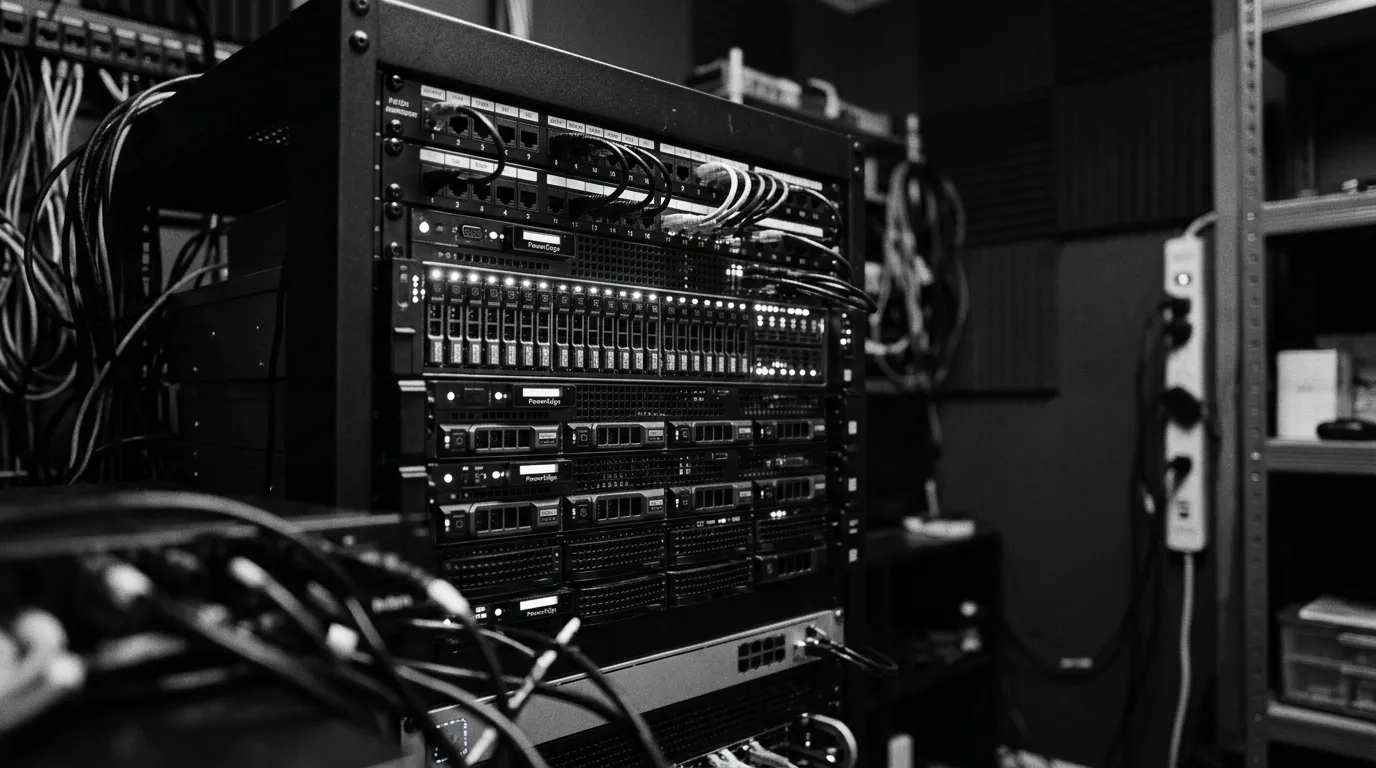
By my estimate, around 90% of the tasks in a normal company can be handled by a small, capable open model in the 3-8B parameter class, without a single API token. The setup is unglamorous: a machine on the local network running a model, wired into the tools that are already there. Of course the frontier will keep demanding more resources, and there is still enormous potential for performance gains we will see in upcoming generations. But the useful work is decoupling from the frontier.
Software stops being the moat
This feeds into a larger shift: software is becoming cheap to produce. When anyone can build software, software as a product loses value, and large companies whose business model is renting generic software will run into real difficulties. Meanwhile it has become genuinely easy to build custom software tailored exactly to one company.
Custom software combined with self-hosted AI models is a considerable competitive advantage for whoever sets it up now, while it is still a choice and not a necessity. The technology will prevail regardless; the only decision left is which side of the transition you are on.
What I run today
I run several AI models on my own systems and reach for large cloud models less and less. My tools work locally, and I can keep working without an internet connection and without dependencies. Depending entirely on the cloud will become a problem eventually, not because the cloud disappears, but because you cannot plan around terms you do not control.
The end state is hybrid: large cloud models where their reach earns their price, own models everywhere else. That split is arriving whether or not anyone announces it. The advantage goes to the people who already have the infrastructure running when it does.

Related